Onni Fulton Market: Real Estate Investment Insights for 2024
The Fulton Market district in Chicago has emerged as one of the most dynamic real estate markets in the Midwest, attracting significant institutional investment and reshaping the urban landscape. Onni, a leading North American real estate developer and operator, has positioned itself strategically within this transformation, bringing mixed-use developments that blend residential, commercial, and retail components. Understanding the investment dynamics of Onni Fulton Market requires examining market fundamentals, development trends, and the broader economic factors driving value creation in this historic neighborhood.
Fulton Market’s evolution from a wholesale produce and meat-packing hub to a vibrant mixed-use destination represents a compelling case study in urban revitalization. The neighborhood’s proximity to downtown Chicago, combined with its industrial heritage and authentic character, has created an attractive proposition for both developers and investors. Onni’s projects within this market reflect broader trends in how institutional capital approaches urban real estate in secondary markets with significant upside potential.

Understanding Onni’s Market Position
Onni Group, headquartered in Toronto with significant U.S. operations, has established itself as a major player in the North American real estate development sector. The company’s investment thesis in Fulton Market aligns with proven strategies in urban infill development, where underutilized industrial properties transform into high-density, mixed-use communities. Onni’s approach emphasizes creating neighborhoods rather than isolated projects, integrating residential units, office spaces, retail establishments, and public amenities into cohesive environments.
The company’s portfolio demonstrates a consistent focus on markets experiencing demographic shifts and economic growth. Market Rise Hub Blog provides comprehensive analysis of emerging investment opportunities in urban markets. Onni’s Fulton Market investments benefit from Chicago’s position as a major metropolitan hub with strong job growth, particularly in technology, professional services, and creative industries. The developer’s track record in managing complex urban projects provides operational expertise that reduces execution risk for institutional investors.
Onni’s capital structure typically involves partnerships with institutional investors, pension funds, and real estate investment trusts (REITs). This approach allows the company to access substantial development capital while distributing risk across multiple stakeholders. For investors evaluating Onni Fulton Market opportunities, understanding the developer’s financial stability and historical project delivery becomes crucial to assessing investment viability.
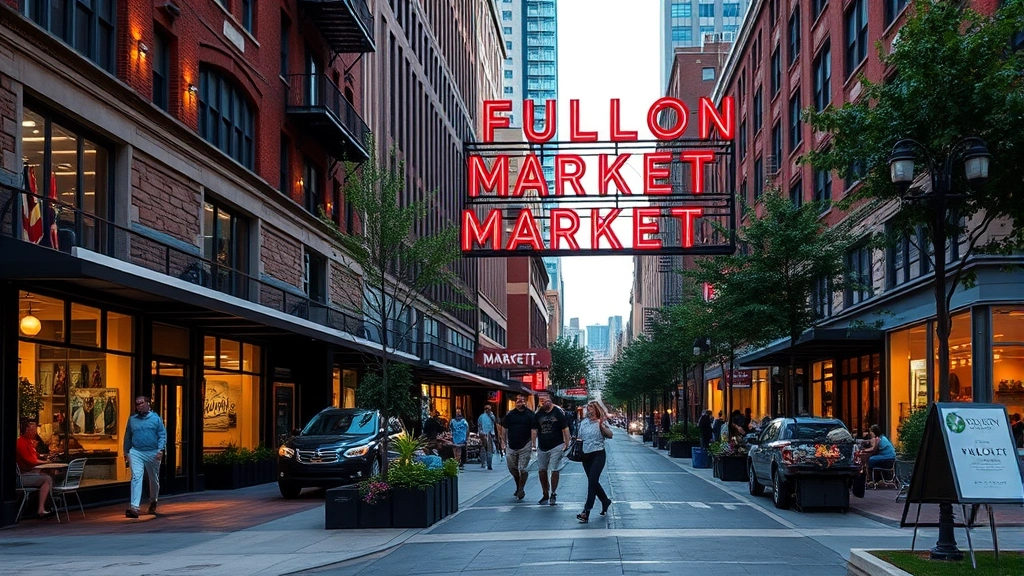
Fulton Market Development Timeline
Fulton Market’s transformation accelerated significantly in the 2010s, with major infrastructure investments and zoning changes that facilitated mixed-use development. The neighborhood’s history as Chicago’s primary wholesale market created a unique foundation for redevelopment—existing buildings offered authentic character and substantial floor plates suitable for adaptive reuse. Onni entered the market during this growth phase, acquiring and developing properties that capitalized on improving market fundamentals.
The timeline of development in Fulton Market reveals strategic phasing that correlates with market absorption rates. Early projects established proof of concept, demonstrating that residential and office tenants would relocate to the neighborhood. Subsequent phases benefited from improved market perception, lower leasing risk, and higher achievable rents. Onni’s projects followed this pattern, with developments sequenced to capitalize on improving market conditions and established amenities.
Recent years have seen acceleration in Fulton Market development, with multiple projects at various stages of completion. This competitive environment intensifies the need for differentiation through design quality, amenity offerings, and operational excellence. Markets Near Me resources help investors identify comparable properties and understand neighborhood-level dynamics affecting investment returns.
Investment Fundamentals
Real estate investment returns in urban infill markets like Fulton Market derive from multiple sources: rental income, property appreciation, tax benefits, and development profits. For Onni Fulton Market projects, the investment thesis typically emphasizes long-term hold strategies rather than quick exits. The company’s institutional capital partners seek stable cash flows from residential leasing, office tenant occupancy, and retail revenue, combined with appreciation as the neighborhood matures and achieves higher market valuations.
Residential component fundamentals in Fulton Market remain strong, driven by Chicago’s demographic trends favoring urban living. Young professionals and empty-nesters increasingly prefer walkable neighborhoods with diverse amenities. Onni’s residential projects command premium rents compared to suburban alternatives, reflecting the value of location, design, and urban lifestyle. Occupancy rates across the neighborhood remain elevated, with strong retention indicating tenant satisfaction and sustainable rental growth.
Office market dynamics within Fulton Market have evolved with broader commercial real estate trends. Post-pandemic, companies reduced space per employee but increasingly sought distinctive locations that attract talent. Onni’s office components benefit from authentic industrial architecture adapted for modern workplace requirements. Hybrid work arrangements reduced absolute office demand but increased emphasis on quality, design, and location—factors favoring well-designed urban infill projects.
The retail component of Onni Fulton Market projects requires careful tenant curation and management. Ground-floor retail activates public spaces and drives foot traffic, enhancing the overall neighborhood experience. Successful retail tenancy depends on understanding neighborhood demographics, visitor patterns, and complementary uses. Onni’s retail strategy emphasizes local and unique concepts that reinforce the neighborhood’s distinctive character rather than pursuing traditional chain retail.
Key metrics for evaluating investment fundamentals include:
- Net operating income (NOI) growth rates relative to market benchmarks
- Residential occupancy percentages and rent growth year-over-year
- Office leasing spreads and tenant renewal rates
- Retail lease rates and tenant stability
- Capitalization rates compared to comparable properties
- Return on invested capital (ROIC) for development projects
Mixed-Use Development Strategy
Onni’s approach to Fulton Market development emphasizes mixed-use integration as a value creation driver. Unlike single-use projects, mixed-use developments create synergies—residential tenants patronize ground-floor retail, office workers utilize amenities, and diverse uses ensure activity throughout the day and week. This model reduces dependency on any single revenue stream and creates resilience against sector-specific downturns.
The physical design of mixed-use projects significantly impacts success. Onni’s Fulton Market projects incorporate public plazas, pedestrian connections, and street-level activation that encourage interaction between uses. The developer’s investment in public realm improvements extends beyond property boundaries, contributing to neighborhood-wide enhancement that benefits all properties. This approach aligns with research suggesting that neighborhood-level improvements drive appreciation across the market.
Amenity strategies within Onni’s projects reflect understanding of tenant preferences and willingness to pay premiums for convenience. Residential amenities including fitness centers, coworking spaces, dog parks, and community gathering areas command higher lease rates. Office amenities including conference facilities, food service, and wellness programs attract quality tenants. This comprehensive amenity approach creates competitive advantages in leasing and supports higher valuations.
Understanding Stock Market Terminology becomes relevant when analyzing publicly-traded REITs and development companies with Fulton Market exposure. Institutional investors frequently evaluate real estate through equity market metrics, making financial literacy essential for sophisticated real estate analysis.
Market Dynamics and Competition
Fulton Market’s success has attracted multiple developers, intensifying competition for available sites and tenant leases. This competitive environment benefits end-users through improved quality and service but challenges developers’ return expectations. Onni’s competitive advantages derive from capital availability, development expertise, and operational capabilities that allow execution of complex projects efficiently.
Competitive analysis of Onni Fulton Market projects requires examining comparable developments from other major developers. Properties compete on location within the neighborhood, design quality, amenity offerings, and pricing. Understanding market segmentation—identifying which tenant types prefer which locations—helps assess specific project positioning. Onni’s portfolio approach allows optimization across multiple properties, potentially shifting tenants to maximize returns.
The competitive landscape extends beyond direct real estate competitors to include alternative destinations for residential, office, and retail tenancy. Downtown Chicago, emerging neighborhoods like Pilsen and Bridgeport, and suburban options all compete for the same tenant base. Fulton Market’s advantages—authenticity, walkability, distinctive character, and improving amenity base—must sustain competitive differentiation as supply increases.
Market research from CoStar and CBRE provides detailed competitive intelligence on Fulton Market dynamics, including supply, demand, rent growth, and occupancy trends. Professional investors utilize these platforms to monitor market conditions and adjust strategy accordingly.
Residential Demand Patterns
Chicago’s residential market trends favor urban living, particularly among younger demographics and empty-nesters. Fulton Market’s positioning within the city, combined with walkable amenities and distinctive character, attracts these target markets. Onni’s residential units command premium pricing relative to comparable square footage in less desirable locations, reflecting location value and design quality.
Demographic analysis of Fulton Market residents reveals concentration of college-educated professionals with above-average incomes. This tenant profile demonstrates strong rental payment capability and preference for quality properties. Retention rates in Onni projects reflect tenant satisfaction, reducing turnover costs and vacancy exposure. Understanding tenant demographics helps forecast demand stability and support long-term investment returns.
Rental rate growth in Fulton Market has outpaced broader Chicago trends, reflecting neighborhood-specific demand strength. As the neighborhood matures and amenities multiply, rental growth may moderate toward market-wide averages. Investors must assess whether current pricing reflects sustainable demand or speculative premiums vulnerable to correction. Digital Marketing Trends 2025 increasingly influence how developers market residential offerings, with virtual tours, online leasing, and digital community building becoming standard practices.
Unit mix strategy—the proportion of one-bedroom, two-bedroom, and larger units—significantly impacts revenue and occupancy. Onni’s residential projects typically emphasize smaller, more affordable units that appeal to younger professionals, combined with premium units for higher-income tenants. This mix maximizes occupancy while capturing a portion of higher rents from premium units.
Commercial Real Estate Trends
Office real estate in Fulton Market reflects broader structural shifts in commercial real estate. Post-pandemic demand for traditional office space has declined, but demand for distinctive, high-quality office space in vibrant neighborhoods remains robust. Onni’s office components feature open plans, natural light, and adaptability—characteristics increasingly valued by tenants transitioning to hybrid work models.
Technology companies, professional service firms, and creative industries represent primary office tenant types in Fulton Market. These sectors value location, design, and talent attraction capabilities that urban neighborhoods provide. Onni’s office marketing emphasizes proximity to transit, residential amenities, and collaborative spaces that facilitate employee recruitment and retention.
Retail real estate within Fulton Market requires sophisticated merchandising strategy. Unlike traditional shopping centers, neighborhood retail succeeds through curation and complementarity. Onni’s retail leasing strategy emphasizes local ownership, unique concepts, and uses that activate the public realm. This approach creates authentic neighborhood character that attracts both residents and visitors, generating foot traffic and sales for retail tenants.
NAIOP Commercial Real Estate Development Association publishes research on commercial development trends and market dynamics. Professional investors utilize industry research to understand broader market forces affecting Fulton Market real estate.
Risk Factors and Considerations
Real estate investment inherently involves multiple risk categories that investors must evaluate. Market risk—the possibility that neighborhood demand softens or competitive supply exceeds expectations—directly impacts rental income and property values. Onni Fulton Market investments depend on sustained demand from residential, office, and retail tenants, making market monitoring essential.
Development risk encompasses construction delays, cost overruns, and design issues that reduce expected returns. Onni’s track record and operational expertise mitigate these risks, but no development project eliminates construction risk entirely. Investors should evaluate project timelines, budget reserves, and contingency planning before committing capital.
Interest rate risk affects both development financing and property valuations. Rising interest rates increase borrowing costs for developers and reduce capitalization rates that investors use to value properties. Current interest rate environment affects expected returns and the timing of investment decisions. Sophisticated investors analyze interest rate scenarios and their implications for project returns.
Regulatory and zoning risk, while currently favorable in Fulton Market, could change with political transitions or neighborhood opposition. Zoning changes, density restrictions, or affordability requirements could impact development economics. Investors should monitor local political dynamics and regulatory trends that might affect project viability.
Operational risk—the possibility that Onni fails to execute effectively or maintain properties to expected standards—directly impacts tenant satisfaction and retention. The company’s operational track record and management systems reduce this risk, but ongoing monitoring remains appropriate for long-term investors.
Tenant concentration risk affects projects with large single tenants or limited tenant diversity. Onni’s mixed-use approach and multiple property strategy reduce this risk, but investors should understand specific tenant composition and lease expiration schedules for projects they’re considering.
Economic downturn risk represents a fundamental concern for all real estate investments. Recession could reduce demand for residential, office, and retail space, impacting occupancy and rents. However, well-located, high-quality projects in strong neighborhoods typically outperform during downturns, suggesting Fulton Market positioning provides some recession resilience.
Understanding Marketing Strategy for Small Businesses becomes relevant when evaluating retail tenancy and neighborhood activation strategies. Successful retail requires effective tenant marketing to drive foot traffic and sales, supporting lease renewals and rent growth.
FAQ
What makes Onni Fulton Market projects attractive to institutional investors?
Onni Fulton Market projects attract institutional capital through a combination of factors: strong location in a revitalized urban neighborhood, experienced developer with operational track record, mixed-use model that diversifies revenue, and potential for appreciation as the neighborhood matures. The company’s capital structure and partnership approach align with institutional investor preferences for risk distribution and professional management.
How do Fulton Market rents compare to other Chicago neighborhoods?
Fulton Market residential rents command premiums relative to comparable square footage in less central locations or less desirable neighborhoods. However, rents remain below premium downtown neighborhoods like the Loop or River North. This positioning reflects neighborhood quality and location advantages while offering better value than the most expensive Chicago markets. Rent growth rates in Fulton Market have exceeded city averages, reflecting strong demand and limited supply.
What is the typical investment hold period for Onni Fulton Market projects?
Onni typically pursues long-term hold strategies for Fulton Market projects, with 10-15 year investment horizons being common. This extended timeline allows the neighborhood to mature, achieve stabilized occupancy, and capture appreciation. Some projects may be refinanced or sold earlier if market conditions prove exceptionally favorable, but the fundamental strategy emphasizes patient capital and long-term value creation.
How does the pandemic affect Fulton Market demand?
Pandemic impacts on Fulton Market have been mixed. Residential demand strengthened as people prioritized living space and sought urban amenities. Office demand initially declined as companies reduced space, though recent trends show stabilization and demand from companies seeking distinctive locations. Retail demand recovered as consumers returned to in-person shopping, though tenant mix shifted toward experiential and essential retail. Overall, Fulton Market’s positioning as a vibrant neighborhood proved resilient through pandemic disruption.
What financing structures do developers use for Fulton Market projects?
Onni typically utilizes diversified financing including construction loans from institutional lenders, permanent financing from life insurance companies and REITs, and equity from institutional partners. This layered approach distributes risk and optimizes the capital structure. Why Marketing is Important for Business principles extend to how developers market projects to potential lenders and investors, emphasizing value creation narratives and market positioning.
How does neighborhood supply growth affect investment returns?
Increasing supply in Fulton Market will eventually moderate rent growth as new units come online. However, well-located, high-quality projects typically maintain occupancy and rent premiums relative to less desirable supply. Onni’s design quality and operational excellence position projects to compete effectively even as supply increases. Investors should monitor supply pipelines and absorption rates to assess whether market rents can sustain current pricing levels.
What role do public improvements play in Fulton Market investment returns?
Public improvements—streetscape enhancements, transit upgrades, park development—significantly enhance neighborhood value and property valuations. Onni’s projects often include private contributions to public realm improvements that benefit the entire neighborhood. These improvements increase foot traffic, reduce vacancy, and support rent growth, directly impacting investment returns. Investors should evaluate public improvement plans and their timing relative to project lease-up phases.
How do investors evaluate Onni’s operational capability?
Investors assess Onni’s operational capability through multiple lenses: historical project delivery, tenant satisfaction metrics, occupancy rates, rent growth achievement, and management team credentials. Third-party reports from real estate analysts, tenant surveys, and competitive benchmarking provide objective data on operational performance. The company’s ability to attract and retain quality tenants, maintain properties effectively, and adapt to market changes demonstrates operational competence.