
Is Free Market Capitalism Sustainable? Expert Insight
Free market capitalism has been the dominant economic model driving global commerce for centuries, yet its sustainability remains one of the most contested questions in economics, business, and public policy. As entrepreneurs and business leaders navigate increasingly complex market dynamics, understanding whether this system can sustain itself long-term has never been more critical. From environmental concerns to wealth inequality and systemic risks, the pressures on free market capitalism continue to mount.
The sustainability debate transcends academic circles. It directly impacts how businesses operate, how small businesses develop their marketing strategy, and how corporations allocate resources for long-term growth. When market mechanisms face structural challenges, companies must adapt their operational frameworks and strategic approaches to remain competitive and viable.
This comprehensive analysis examines whether free market capitalism can sustain itself, exploring the mechanisms that support it, the critical challenges threatening it, and the adaptive strategies businesses are implementing to thrive within evolving market conditions.
Understanding Free Market Capitalism Fundamentals
Free market capitalism operates on principles of voluntary exchange, price signals, competition, and minimal government intervention. In theory, these mechanisms create self-correcting systems where supply and demand naturally balance, innovation flourishes, and resources flow to their most productive uses. Businesses succeed by providing value to consumers, and failure removes inefficient market participants.
The system’s foundational strength lies in its incentive structure. Profit motivation drives entrepreneurs to solve problems, create new products, and optimize operations. This dynamic has generated unprecedented wealth creation and technological advancement. However, the sustainability question emerges when examining whether these short-term incentives align with long-term systemic health.
Companies developing digital marketing strategy examples operate within this capitalist framework, where competition incentivizes better customer engagement and innovation. Yet this same competitive pressure sometimes encourages externalities that undermine broader market stability.
Core Sustainability Mechanisms
Several built-in mechanisms theoretically support free market capitalism’s sustainability:
- Price Discovery: Market prices contain information that coordinates billions of individual decisions without central planning, enabling efficient resource allocation across complex economies.
- Creative Destruction: Schumpeter’s concept describes how innovation eliminates obsolete businesses and practices, preventing stagnation while maintaining dynamism. This process renews market vitality across generations.
- Competitive Pressure: Companies must continuously improve or lose market share, creating constant pressure for efficiency, quality, and innovation that benefits consumers and economy-wide productivity.
- Profit Incentives: Financial rewards motivate entrepreneurs to identify unmet needs, develop solutions, and scale successful innovations, channeling ambition toward productive outcomes.
- Decentralized Decision-Making: Millions of independent actors making self-interested choices collectively produce more responsive outcomes than centralized planning could achieve.
These mechanisms have proven remarkably effective at generating growth, employment, and material prosperity. Historical data demonstrates that market-oriented economies consistently outperform command economies in living standards, innovation rates, and consumer satisfaction across measurable metrics.
Critical Challenges Threatening Sustainability
Despite theoretical strengths, free market capitalism faces mounting structural challenges that undermine long-term viability. Understanding these pressures is essential for businesses developing comprehensive marketing plans that account for evolving market conditions and regulatory landscapes.
Concentration of Market Power: Digital platforms and network effects have created unprecedented market concentration. A handful of companies now control massive shares of search, social media, e-commerce, and cloud computing. This concentration limits competition, reduces innovation incentives, and creates systemic vulnerabilities. When dominant firms control market access, smaller competitors and new entrants face barriers that undermine the competitive process itself.
Information Asymmetries: Modern markets suffer from severe information gaps. Consumers lack complete product information; investors cannot accurately assess company risks; workers don’t know true compensation comparables. These asymmetries prevent price signals from functioning optimally, distorting resource allocation and enabling exploitation.
Financialization and Short-Termism: Capital markets increasingly prioritize quarterly earnings over long-term sustainability. Companies face pressure to maximize shareholder returns immediately rather than invest in innovation, worker development, or infrastructure. This structural incentive misalignment encourages decisions that generate short-term profits while undermining long-term viability.
Environmental and Social Pressures
Perhaps the most fundamental challenge to free market capitalism’s sustainability involves environmental degradation and social inequality. These represent critical market failures that price mechanisms alone cannot address.
Environmental Externalities: Free market capitalism excels at allocating resources between willing participants but struggles with environmental costs imposed on uninvolved parties. Carbon emissions, pollution, deforestation, and resource depletion are not priced into market transactions. Companies maximizing profits may legitimately ignore these costs under current market rules, yet they accumulate into existential risks for entire societies.
The World Wildlife Fund reports that global biodiversity has declined 68% since 1970, directly linked to economic activity. Conversely, internalizing environmental costs through carbon pricing and regulations transforms business incentives, encouraging sustainable practices within market frameworks.
Wealth Concentration: Market-driven economies tend toward wealth concentration over time. Successful firms grow larger; successful investors accumulate more capital; inherited wealth compounds. This concentration reduces economic mobility, concentrates political power, and undermines the competitive meritocracy that legitimizes capitalism. When wealth becomes hereditary and self-perpetuating rather than earned through market competition, the system loses moral authority and creates social instability.
Labor Market Pressures: Automation, globalization, and platform economics have disrupted traditional employment relationships. Workers face wage stagnation, benefits erosion, and employment instability while productivity and corporate profits rise. This divergence between capital and labor returns threatens consumer purchasing power and social cohesion essential for market stability.
Market Failures and Systemic Risks
Free market capitalism depends on functioning institutions and predictable rules. However, systemic risks and market failures increasingly threaten this foundation. Franchise marketing success and broader business viability depend on stable market infrastructure that prevents catastrophic failures.
Financial System Instability: The 2008 financial crisis demonstrated how interconnected markets create systemic risks. Banks pursued profits through excessive leverage and risky derivatives, creating cascading failures that required massive government intervention. Market mechanisms alone failed to prevent this collapse, suggesting capitalism requires external stabilization to prevent self-destruction.
Information Cascade Failures: Digital networks enable rapid information spread but also create conditions for cascading failures. Viral misinformation, flash crashes, and coordinated trading can destabilize markets faster than human actors can respond. These technological externalities weren’t anticipated when market theory was developed.
Tragedy of the Commons: Resources without clear ownership—atmosphere, oceans, groundwater—face overexploitation as individual market actors rationally pursue profits while collectively destroying shared resources. Market mechanisms cannot price what nobody owns, creating systematic overuse of common resources.
Adaptive Strategies for Long-Term Viability
Rather than viewing free market capitalism as binary—either sustainable or not—contemporary analysis recognizes it as an evolving system adapting to emerging challenges. Successful businesses and economies are implementing strategies to address sustainability concerns while preserving market mechanisms.
Environmental Regulation and Carbon Pricing: Governments increasingly internalize environmental costs through regulations and market mechanisms like carbon pricing. These interventions make environmental sustainability a market concern rather than an externality, aligning profit incentives with ecological health. Companies that embrace these frameworks early gain competitive advantages in resource efficiency.
Stakeholder Capitalism: Progressive corporations recognize that long-term profitability requires considering worker welfare, community impact, and environmental stewardship alongside shareholder returns. This stakeholder approach, detailed in Corporate Board Member research, shows that companies addressing social and environmental concerns achieve superior long-term financial performance.
Platform Regulation: Governments are implementing regulations addressing market concentration in digital platforms. These interventions preserve competitive markets by preventing dominant firms from using their positions anticompetitively, maintaining the competitive process that capitalism depends upon.
Transparency and Disclosure Requirements: Regulations requiring companies to disclose financial risks, environmental impacts, and labor practices address information asymmetries. Better information enables markets to function more efficiently and prevents hidden risks from accumulating.
Role of Technology and Innovation
Technology presents both challenges and solutions to capitalism’s sustainability. Digital platforms created concentration problems, yet technology also enables solutions previously impossible.
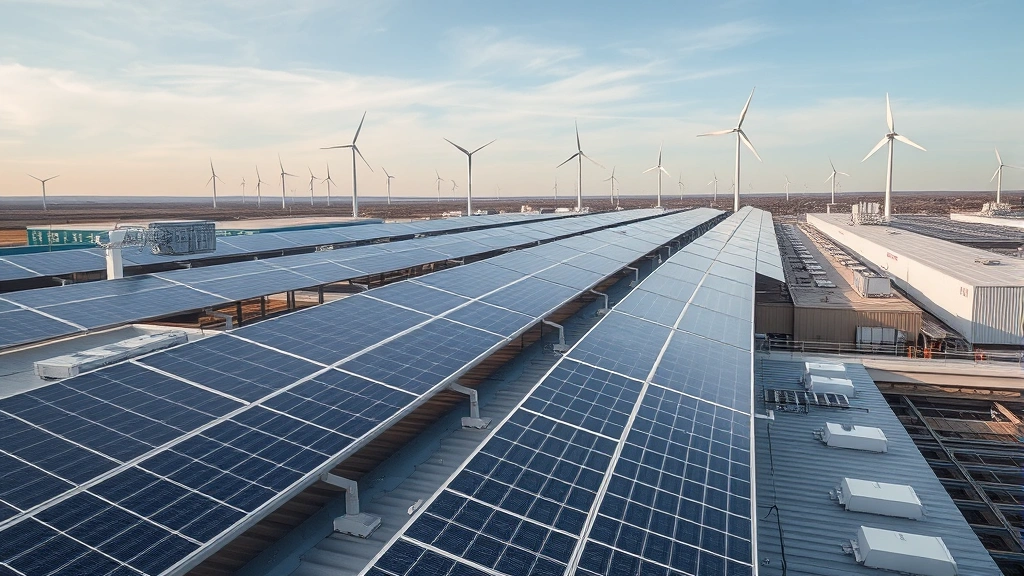
Renewable Energy Innovation: Solar and wind technologies have become cost-competitive with fossil fuels through market-driven innovation. Entrepreneurs pursuing profits in clean energy have created technological breakthroughs that make environmental sustainability economically viable. This demonstrates how market incentives can align with sustainability when technologies mature.
Circular Economy Technologies: Companies are developing technologies for recycling, remanufacturing, and resource recovery that create profitable business models while reducing environmental impact. These innovations show how capitalism can adapt to sustainability constraints by finding profitable solutions.
Blockchain and Transparency: Distributed ledger technologies enable unprecedented transparency in supply chains, financial transactions, and environmental impact tracking. This transparency addresses information asymmetries and enables market participants to make better-informed decisions.
Understanding emerging digital marketing trends helps businesses anticipate how technology reshapes market dynamics and customer behavior, enabling proactive strategy development.
Expert Perspectives on Future Outlook
Leading economists and business scholars offer nuanced perspectives on free market capitalism’s sustainability:
The Regulation School: Economists like National Bureau of Economic Research contributors argue that capitalism requires evolving institutional frameworks. As economies become more complex and interconnected, rules must adapt to prevent market failures. This perspective sees sustainability not as capitalism’s inherent property but as an outcome of appropriate regulation.
The Innovation Optimists: Entrepreneurs and venture capitalists emphasize that capitalism’s greatest strength is generating innovations that solve previously intractable problems. They argue that market mechanisms will produce sustainability solutions as these become profitable, pointing to renewable energy and electric vehicles as examples.
The Structural Critics: Scholars highlighting wealth concentration and environmental limits argue that capitalism’s incentive structure fundamentally misaligns with sustainability. They contend that markets cannot adequately value future generations’ welfare or non-monetary environmental goods, requiring fundamental systemic changes.
The Pragmatic Synthesizers: Many contemporary economists acknowledge validity in all perspectives. They argue that well-regulated capitalism—with appropriate environmental pricing, market competition enforcement, and social safety nets—can sustain itself and generate broad prosperity. This view accepts both market mechanisms’ power and their limitations.
FAQ
Can free market capitalism address climate change?
Market mechanisms alone have not adequately addressed climate change, given that carbon emissions lack price signals. However, carbon pricing and environmental regulations can integrate climate costs into market decisions, enabling capitalism to address this challenge. Countries implementing carbon pricing demonstrate this approach’s viability, though political barriers often prevent sufficient pricing to match scientific requirements.
Is wealth concentration inevitable under capitalism?
Historical analysis suggests capitalism tends toward wealth concentration absent corrective mechanisms. Progressive taxation, antitrust enforcement, and inheritance taxes can counteract this tendency while preserving market mechanisms. The question is not whether capitalism generates concentration but whether societies implement sufficient redistribution to maintain competitive markets and social cohesion.
What role does government play in sustainable capitalism?
Effective markets require government to enforce contracts, prevent monopolies, internalize externalities, and maintain infrastructure. Rather than opposing capitalism, appropriate government intervention preserves the competitive markets capitalism depends upon. The debate concerns which interventions prove effective, not whether intervention itself is necessary.
How do businesses prepare for capitalism’s evolution?
Companies should develop strategies addressing environmental costs, labor relations, and long-term stakeholder value alongside profitability. This approach, detailed in comprehensive market analysis resources, helps businesses thrive as regulations evolve and consumer preferences shift toward sustainability.
Are alternative economic systems more sustainable?
Historical evidence shows command economies underperformed in efficiency, innovation, and living standards compared to market economies. However, this comparison doesn’t validate unregulated capitalism. Most successful modern economies blend market mechanisms with regulation, social safety nets, and environmental protections—a mixed system incorporating capitalism’s strengths while addressing its limitations.