DC Housing Market Trends: Analyst Insights for 2025
The Washington, D.C. housing market remains one of the most dynamic and closely watched real estate sectors in the United States. As a major metropolitan area with strong employment fundamentals, government presence, and tech sector growth, the district continues to attract investors, homebuyers, and renters seeking premium properties. Understanding current market dynamics is essential for anyone considering entry into this competitive landscape, whether as a buyer, seller, or investor.
Recent data from multiple housing analytics firms reveals significant shifts in pricing patterns, inventory levels, and buyer preferences across D.C. neighborhoods. The market has stabilized after years of rapid appreciation, creating both challenges and opportunities for market participants. Analysts point to interest rate adjustments, demographic changes, and supply-demand imbalances as key factors shaping the trajectory of residential real estate in the nation’s capital.
This comprehensive analysis explores the multifaceted trends defining the DC housing market in 2025, drawing on insights from industry experts and empirical market data. Whether you’re monitoring broader economic indicators through our stock market coverage or seeking localized real estate intelligence, understanding these housing trends provides crucial context for investment decisions.

Current Market Conditions and Price Dynamics
The DC housing market has experienced a notable deceleration in price growth compared to the explosive appreciation seen from 2020 to 2022. According to Zillow’s housing research division, median home prices in Washington, D.C. currently hover around $675,000 to $725,000, reflecting a slight adjustment from peak valuations. This moderation represents a healthier market equilibrium, where price increases align more closely with fundamental economic growth rather than speculative fervor.
What distinguishes the current environment is the bifurcation occurring across price segments. Luxury properties (above $2 million) have experienced the most significant corrections, with some premium listings sitting on the market longer than historical averages. Conversely, properties in the $400,000 to $650,000 range maintain stronger buyer interest, suggesting that middle-market segments remain relatively resilient. This divergence reflects changing buyer priorities and affordability constraints affecting household purchasing power.
Market velocity metrics tell an important story about buyer confidence. Average days on market have increased from 25-30 days in 2021 to approximately 45-60 days in early 2025. However, this still compares favorably to national averages of 65-75 days, indicating that D.C. remains a relatively liquid market where properties move with reasonable speed. For investors tracking broader economic patterns, these metrics correlate strongly with employment stability and localized market conditions that extend beyond real estate.
Price per square foot metrics reveal important nuances about value perception. D.C. proper maintains prices around $550-$650 per square foot, while inner suburbs like Arlington and Alexandria command $450-$550 per square foot. This pricing hierarchy reflects transportation access, school quality, and neighborhood amenities that drive buyer decision-making. Savvy investors monitor these micro-market variations to identify emerging value opportunities before broader market recognition.
Inventory Levels and Supply Constraints
One of the most critical factors constraining the DC housing market is persistent inventory shortage relative to demand. The months of supply metric—indicating how many months it would take to exhaust available inventory at current sales pace—hovers around 2.5-3.5 months in most D.C. neighborhoods. Real estate professionals consider 5-6 months as a balanced market, meaning the district remains decidedly seller-favorable despite recent moderation.
This supply constraint stems from multiple structural factors. First, many homeowners purchased properties during the low-interest-rate environment (2010-2021) and have no financial incentive to sell. Selling would require purchasing replacement housing at current market prices and significantly higher interest rates, creating a powerful disincentive to move. Second, D.C.’s geographic constraints and zoning regulations limit new construction capacity, preventing supply from expanding to meet demand growth from population increases and remote-work migration patterns.
The undersupply situation has particular implications for rental market dynamics and affordability pressures. When homeownership becomes financially constrained for middle-income households, rental demand increases, pushing rents higher and creating affordability challenges across income segments. This dynamic connects to broader economic trends you can explore through our Market Rise Hub Blog, which covers interconnected economic systems affecting consumer behavior.
New construction activity in D.C. proper remains limited by zoning restrictions and high land costs. Multifamily development continues in select corridors (H Street, NoMa, Navy Yard), but single-family home construction is negligible. This structural supply limitation suggests that inventory shortages will persist as a market characteristic, maintaining upward pressure on prices despite cyclical demand fluctuations. Developers and investors should monitor zoning reform initiatives that could unlock additional supply.
Neighborhood-Specific Performance Analysis
The DC housing market comprises distinct micromarkets with varying performance characteristics. Understanding neighborhood-level dynamics is essential for targeted investment and purchase decisions, as price appreciation and affordability vary significantly across the city’s eight wards.
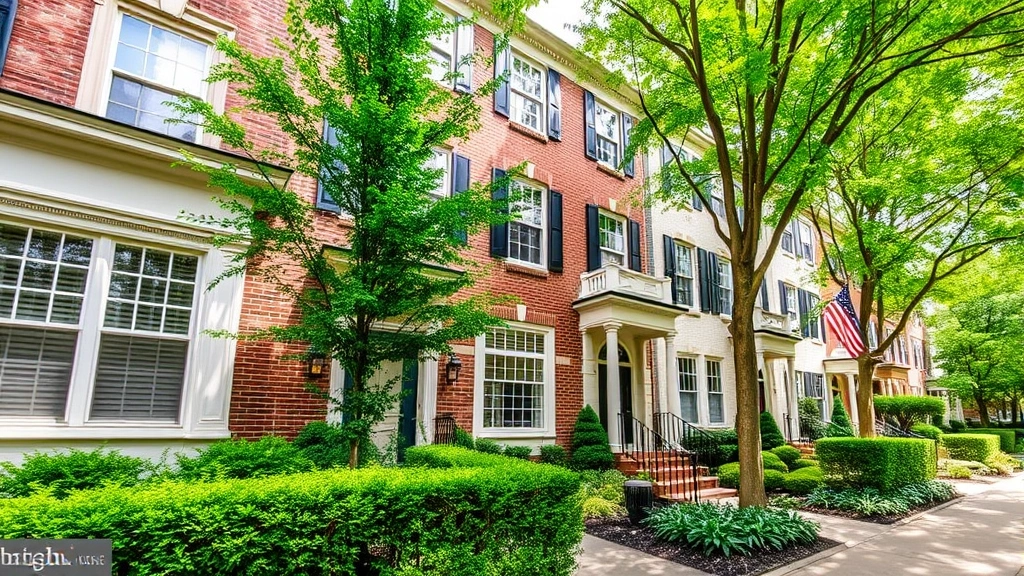
Northwest D.C. (Wards 1, 3, 4): These traditionally affluent neighborhoods maintain premium valuations, with properties in Cleveland Park, Chevy Chase, and Tenleytown ranging from $850,000 to $2.5 million. These areas benefit from established institutional presence (universities, hospitals), excellent schools, and tree-lined residential character. Price growth has moderated but remains positive, with strong demand from empty-nesters and established professionals seeking stable neighborhoods.
Central D.C. (Ward 6, Capitol Hill): Capitol Hill has undergone significant gentrification over the past 15 years, with median prices now exceeding $700,000. The neighborhood attracts young professionals, investors, and families drawn to proximity to employment centers and vibrant commercial corridors. However, affordability pressures have displaced many lower-income residents, creating policy discussions about housing equity that intersect with broader economic strategy considerations.
Northeast D.C. (Ward 7, 8): These wards represent the district’s emerging opportunity markets. Neighborhoods like Anacostia and Congress Heights have historically faced disinvestment but now benefit from infrastructure improvements, retail development, and investor interest. Median prices remain 30-40% below citywide averages, attracting value-conscious buyers and investor groups. Growth potential is significant, though execution risk and neighborhood stability factors require careful evaluation.
Southwest D.C. (Ward 2, Navy Yard): The Navy Yard/Ballpark neighborhood represents D.C.’s most dynamic development zone. Proximity to the stadium, waterfront amenities, and major transportation hubs drives strong demand. Prices have appreciated 8-12% annually, with continued upside expected as development projects mature. This area appeals to investors seeking appreciation potential with reasonable entry valuations.
Buyer Demographics and Preference Shifts
The composition of DC housing market participants has shifted substantially over recent years, reflecting broader demographic and lifestyle changes. Millennials now represent the largest cohort of first-time homebuyers in the market, with distinct preferences diverging from previous generations’ patterns. These younger buyers prioritize walkability, transit access, and proximity to employment centers over traditional suburban amenities like large yards and garages.
Remote work normalization has complicated traditional buyer logic. While D.C. experienced significant pandemic-era out-migration (2020-2021), recent trends show stabilization and modest return migration as companies implement hybrid policies. This flexibility allows some buyers to seek value in outer suburbs or secondary markets while maintaining D.C. employment, but it also reduces the geographic premium that downtown proximity previously commanded.
International buyer participation in the DC housing market remains meaningful, particularly from Canadian, British, and Gulf State investors seeking U.S. real estate exposure and diversification. These buyers tend to focus on luxury segments and view D.C. as a stable, capital-appreciating asset class. Recent immigration policy discussions create uncertainty that may impact this segment’s activity levels going forward.
Female homebuyers represent an increasingly important demographic segment, now comprising 35-40% of buyer pools in many D.C. neighborhoods. This shift reflects broader women’s economic advancement but also creates specific marketing and product considerations for real estate professionals. Female buyers often prioritize safety, neighborhood stability, and quality-of-life factors over pure appreciation potential.
Rental Market Developments
The DC housing market’s rental sector has experienced dramatic transformation, with rent growth outpacing income growth and creating affordability crises for many households. Median rent for a one-bedroom apartment in D.C. proper now exceeds $1,850 monthly, while two-bedroom units command $2,300-$2,500. These figures represent 40-50% increases over the past five years, far exceeding wage growth for typical workers.
Institutional investors and real estate investment trusts (REITs) have increased multifamily acquisition activity, particularly targeting stabilized properties with value-add potential. This capital inflow has professionalized property management but also contributed to rent escalation as investors pursue market-rate pricing strategies. Tenant advocacy groups and city officials have responded with rental assistance programs and rent stabilization discussions, though legislative progress remains limited.
Build-to-rent development represents an emerging rental market segment, with developers constructing multifamily properties specifically for long-term institutional ownership rather than condo conversion. These projects offer modern amenities and professional management but at rental rates accessible primarily to affluent households, further constraining options for moderate-income renters.
The rental market’s tightness creates interesting dynamics for buy-versus-rent calculations. In many D.C. neighborhoods, purchasing a property generates similar monthly housing costs to renting, with the purchase option providing equity accumulation and inflation hedging benefits. This economic equivalence, combined with supply constraints, supports continued investor interest in residential real estate as a portfolio component.
Interest Rates and Financing Impact
Interest rate movements represent one of the most significant factors shaping DC housing market affordability and buyer behavior. The Federal Reserve’s rate hiking cycle (2022-2023) dramatically increased mortgage costs, reducing purchasing power for typical buyers by 25-30%. A household that could qualify for a $600,000 mortgage at 3% rates could only qualify for approximately $450,000 at 7% rates, assuming consistent income.
Current mortgage rates fluctuate around 6.5-7.5%, elevated compared to the 2010-2021 period but potentially sustainable if the Federal Reserve achieves soft-landing economic outcomes. Rate expectations significantly influence buyer behavior, with potential purchasers often delaying decisions in anticipation of future rate reductions. This psychology creates lumpy demand patterns where market activity accelerates when rates decline and stagnates when increases are anticipated.
Loan product innovation has partially offset rate impacts. Adjustable-rate mortgages (ARMs) with favorable initial rates have attracted some buyers, though long-term rate risk remains a concern. Interest-only loans and other non-traditional products have gained modest market share as borrowers seek to manage monthly payment burdens. Lenders, however, have tightened underwriting standards, requiring higher credit scores and down payments compared to the loose lending environment of 2005-2007.
For investors evaluating the DC housing market within broader economic contexts, interest rate movements correlate strongly with economic health indicators and consumer behavior patterns. Rising rates typically signal inflation concerns and economic cooling, which may pressure employment in D.C.’s government and tech sectors—factors that ultimately influence housing demand and price sustainability.
Investment Opportunities and Risk Factors
The current DC housing market environment presents specific opportunities and challenges for investment-oriented participants. Value-add multifamily properties in emerging neighborhoods (Northeast D.C., Anacostia) offer potential for 8-12% annual appreciation combined with rental income yield of 3-4%. These opportunities require active management and neighborhood commitment but can generate attractive risk-adjusted returns for patient capital.
Single-family rental properties in outer neighborhoods and inner suburbs provide consistent cash flow with moderate appreciation potential. Properties acquired in the $450,000-$600,000 range can generate $2,500-$3,200 monthly rental income, supporting 5-6% capitalization rates before appreciation. This strategy appeals to individual investors seeking income stability with D.C. market exposure.
Luxury property investment carries higher risk due to market sensitivity and lower buyer pools. Properties above $2 million have experienced price corrections and extended marketing periods. However, select ultra-premium properties in premier neighborhoods (Georgetown, Cleveland Park) maintain strong international demand and should be evaluated individually rather than as a homogeneous asset class.
Risk factors warrant serious consideration. Economic recession would disproportionately impact government-dependent D.C. employment, potentially triggering price declines and rental demand softness. Zoning reform that increases supply could moderate appreciation potential significantly. Rising property taxes and maintenance costs erode investment returns over extended holding periods. Regulatory changes addressing short-term rentals and landlord regulations could impact investment property profitability.
For sophisticated investors integrating real estate into broader portfolios, monitoring Redfin’s housing market research and National Association of Realtors economic data provides valuable context for market-timing decisions and neighborhood selection strategies.
Future Outlook and Predictions
Looking forward to 2025-2027, the DC housing market is likely to experience continued moderation in price growth, ranging from 2-4% annually rather than the 8-10% seen in recent years. This normalization reflects market maturation, interest rate stabilization, and inventory supply increases as some homeowners determine that refinancing or selling becomes economically rational.
Demographic trends favor long-term demand resilience. D.C. continues attracting young professionals and diverse populations seeking urban amenities and employment opportunities. The tech sector’s continued expansion in the region, including major company headquarters and satellite offices, provides employment stability and wage growth that support housing demand. These positive demand fundamentals should prevent sharp price declines even if economic growth slows.
Policy developments merit close monitoring. Potential zoning reforms that increase housing supply could gradually moderate price pressures and improve affordability. Conversely, restrictive policies that limit development would reinforce supply constraints and price appreciation. Rental regulation discussions and potential rent stabilization measures could impact investor returns and development feasibility economics.
Neighborhood evolution will continue differentiating market performance. Inner-ring suburbs will likely appreciate faster than D.C. proper as affordability-conscious buyers seek value while maintaining reasonable commute distances. Emerging neighborhoods in Northeast D.C. and Anacostia should experience accelerated development and appreciation as infrastructure improvements and institutional investment create momentum.
For comprehensive market context, exploring CoStar’s commercial real estate analysis and Fannie Mae’s mortgage market research provides professional-grade intelligence complementing residential market analysis. These resources help investors understand interconnections between commercial real estate, employment patterns, and residential demand drivers.
FAQ
What is the current median home price in Washington, D.C.?
The current median home price in Washington, D.C. ranges from $675,000 to $725,000, representing a moderation from peak valuations reached in 2021-2022. Prices vary significantly by neighborhood, with premium areas like Georgetown and Cleveland Park exceeding $1.2 million while emerging neighborhoods offer properties below $500,000.
Is the DC housing market still seller-favorable?
Yes, the DC housing market remains seller-favorable, though less dramatically than during the 2020-2022 period. Months of supply typically range from 2.5-3.5 months compared to the 5-6 month balance point, indicating continued supply constraints that support seller negotiating position. However, buyer leverage has improved compared to recent years.
What neighborhoods offer the best investment potential?
Emerging neighborhoods in Northeast D.C. (Anacostia, Congress Heights) and inner suburbs offer strongest appreciation potential with values 30-40% below citywide medians. Navy Yard continues strong performance with ongoing development. Established neighborhoods like Capitol Hill and Shaw offer stability with modest appreciation and rental income potential.
How have interest rates affected DC housing affordability?
Rising interest rates from 3% to 6.5-7.5% have reduced buyer purchasing power by approximately 25-30%, significantly constraining affordability. A household able to afford a $600,000 purchase at 3% rates can only qualify for roughly $450,000 at current rates, assuming consistent income. This dynamic has shifted demand toward lower-priced segments and extended market times.
What is the rental market situation in D.C.?
The D.C. rental market is extremely tight, with median rents for one-bedroom apartments exceeding $1,850 monthly and two-bedroom units commanding $2,300-$2,500. Rent growth has outpaced income growth, creating affordability challenges. Institutional investor interest remains strong, viewing rental properties as stable income-producing assets with appreciation potential.
Should I buy or rent in Washington, D.C.?
Buy-versus-rent calculations increasingly favor purchasing in many D.C. neighborhoods, where monthly ownership costs approximate rents while providing equity accumulation and inflation hedging benefits. However, this depends on specific neighborhoods, personal timeline, and financial circumstances. Properties in emerging areas offer greater appreciation potential, while established neighborhoods provide stability.
What factors could negatively impact the DC housing market?
Key risk factors include economic recession impacting government employment, zoning reforms increasing supply, rising property taxes and maintenance costs, regulatory changes affecting short-term rentals, and potential interest rate volatility. Additionally, remote work normalization could reduce geographic premium for D.C. proximity, though current trends suggest stabilization rather than continued out-migration.