
The Market Revolution stands as one of the most transformative periods in American economic history, fundamentally reshaping how goods were produced, distributed, and consumed. Occurring primarily between 1815 and 1860, this revolutionary period witnessed the transition from localized, subsistence-based economies to integrated national markets driven by capitalism, technological innovation, and entrepreneurial spirit. Understanding this pivotal era provides invaluable context for modern commerce and explains the foundations of contemporary retail and wholesale systems.
This comprehensive exploration examines the mechanisms, key drivers, and lasting impacts of the Market Revolution. Whether you’re studying American history, analyzing economic trends, or seeking to understand how modern markets evolved, this guide offers actionable insights into one of history’s most consequential economic transformations. The ripple effects of this revolution continue to influence business practices, consumer behavior, and market structures today.
What Was the Market Revolution: Definition and Scope
The Market Revolution refers to the fundamental transformation of the American economy from a collection of isolated, largely self-sufficient regional economies into an integrated national market system. This shift represented far more than simply increased commerce; it embodied a complete restructuring of economic relationships, business practices, and social organization. The period fundamentally altered how Americans produced goods, where they obtained them, and how they understood their relationship to commerce and consumption.
Prior to this revolution, most Americans lived in rural communities where families produced much of what they needed for survival. Local craftsmen and artisans dominated production, with limited long-distance trade. The Market Revolution shattered this paradigm. By the mid-19th century, specialized production centers emerged, transportation networks connected distant regions, and merchants orchestrated complex supply chains that would seem remarkably modern to contemporary observers. This transformation created what economists recognize as the first truly capitalist economy in America.
The scope of the Market Revolution extended beyond mere economic metrics. It fundamentally altered American society, values, and individual identity. As people transitioned from subsistence farming to wage labor and consumer participation, their relationship to work, leisure, and material goods changed dramatically. This period witnessed the birth of American consumer culture and the commercial mentality that continues to define modern society.
Key Drivers and Catalysts
Several interconnected factors combined to ignite the Market Revolution. Understanding these catalysts illuminates how economic transformations occur and why certain periods generate such profound change. The revolution didn’t emerge spontaneously; rather, specific technological, political, and social developments converged to create unprecedented economic opportunities.
Post-War Economic Expansion: Following the War of 1812, the United States experienced a period of relative peace and optimism. Government policies favored domestic production and entrepreneurship. The protective tariffs implemented during this period shielded American manufacturers from foreign competition, allowing them to develop industries that could eventually compete globally. This protective framework created space for American capitalism to flourish.
Capital Availability and Banking Innovation: The establishment of state banks and credit systems provided entrepreneurs with access to capital previously unavailable in most communities. The Second Bank of the United States, chartered in 1816, created a more stable currency and credit environment. As banking infrastructure expanded, merchants and manufacturers could finance larger operations and take greater commercial risks. This democratization of capital access enabled ambitious businesspeople to pursue market opportunities.
Population Growth and Westward Expansion: The American population nearly doubled between 1810 and 1830, creating expanding demand for goods and services. Simultaneously, westward expansion opened new territories and markets. This combination of population pressure and geographic opportunity created unprecedented demand for commercial networks to supply distant settlements. Entrepreneurs recognized that fortunes awaited those who could efficiently move goods across vast distances.
Transportation and Infrastructure Revolution
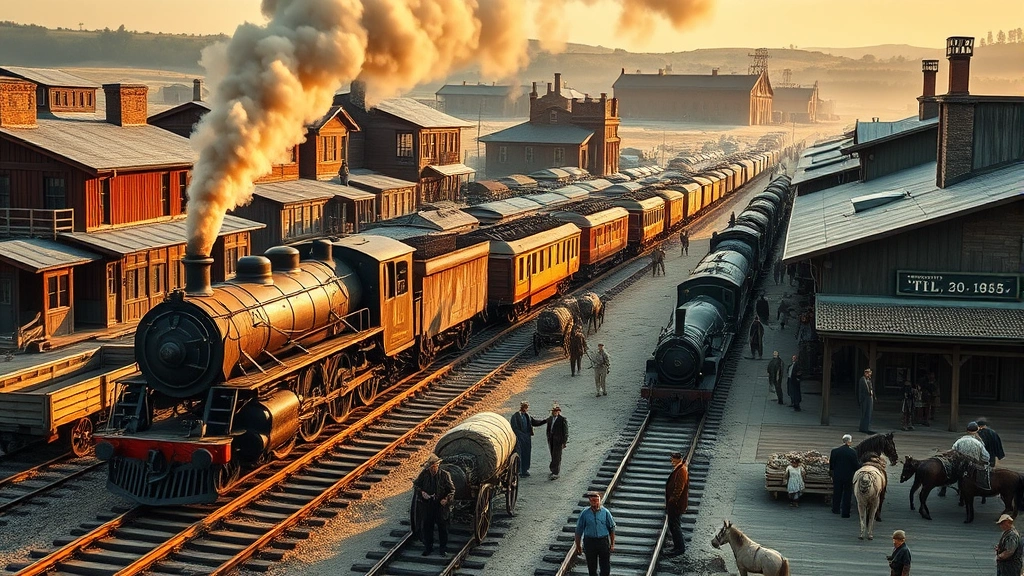
Transportation infrastructure improvements formed the backbone of the Market Revolution. Without the ability to move goods efficiently across distances, integrated national markets couldn’t exist. The period witnessed remarkable investments in transportation networks that fundamentally altered commercial possibilities.
Canal Construction: The Erie Canal, completed in 1825, revolutionized transportation by connecting the Atlantic Ocean to the Great Lakes and western territories. This engineering marvel reduced shipping costs by 90 percent and cut travel time dramatically. The canal’s success inspired a nationwide canal-building boom. By 1840, over 3,000 miles of canals crisscrossed America, fundamentally reshaping trade patterns and commercial relationships. Canal construction demonstrated that infrastructure investment could generate enormous economic returns.
Railroad Development: Railroads ultimately surpassed canals as the dominant transportation mode. The Baltimore and Ohio Railroad, chartered in 1827, initiated America’s railroad era. Unlike canals, railroads operated year-round and could reach inland areas without water access. Railroad expansion accelerated dramatically after 1840, creating a national transportation network that connected previously isolated regions. This infrastructure enabled manufacturers to source raw materials from distant locations and distribute finished products across continental distances.
Road Improvements: Federal and state governments invested in improved roads and turnpikes. The National Road, constructed between 1811 and 1838, connected the Atlantic coast to the Ohio River. These improved transportation corridors reduced travel times and shipping costs, making long-distance commerce economically viable for an expanding range of goods. Better roads enabled stagecoach services and freight wagons to operate more efficiently.
These transportation improvements created what economists call a “transportation revolution.” By dramatically reducing the cost and time required to move goods, these investments transformed commerce from a local activity to a national enterprise. Merchants could now source products from distant manufacturers and consumers could access goods previously unavailable in their localities. This infrastructure foundation enabled all subsequent market integration.
Technological Innovation and Manufacturing
Technological advancement drove manufacturing productivity and enabled mass production of goods previously made by hand. American manufacturers, borrowing from British innovations while developing their own techniques, created production systems that amazed contemporary observers and laid foundations for modern manufacturing.
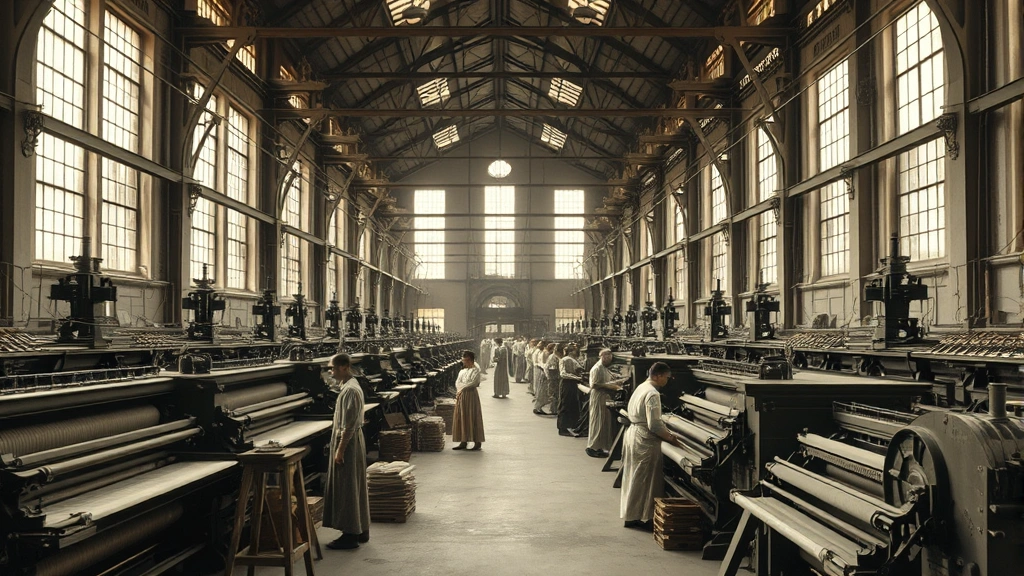
Textile Manufacturing: The textile industry led America’s industrial revolution. Samuel Slater’s mills, established in Rhode Island in the 1790s, demonstrated that mechanized textile production could succeed in America. By the 1820s, textile mills dominated New England’s landscape. These facilities employed thousands of workers and produced cloth at scales and prices that devastated home spinners and weavers. The textile industry’s success proved that factory-based manufacturing could generate substantial profits and employment. For more context on how modern markets evolved from these roots, explore our Market Rise Hub Blog for contemporary analysis.
Iron and Steel Production: Improved iron production techniques enabled construction of machinery, rails, and structural components essential for industrial development. As iron production expanded, costs declined, making metal tools and equipment more affordable. This abundance of inexpensive iron accelerated mechanization across industries. The iron industry also generated substantial employment and wealth accumulation among industrialists.
Agricultural Innovation: Mechanical reapers, threshers, and other agricultural machines increased farm productivity dramatically. Eli Whitney’s cotton gin, invented in 1793, revolutionized cotton production and inadvertently entrenched slavery in the South. These innovations meant fewer farmers could produce more output, freeing labor for industrial employment while increasing agricultural marketability.
Interchangeable Parts Manufacturing: American manufacturers pioneered techniques for producing standardized, interchangeable parts. Eli Whitney, Samuel Colt, and other innovators developed manufacturing systems that enabled mass production of complex items like firearms and clocks. This manufacturing approach, eventually called the “American System,” became a model for global manufacturing and enabled economies of scale that reduced per-unit costs dramatically.
Labor Markets and Workforce Changes
The Market Revolution fundamentally transformed labor relationships and employment patterns. As manufacturing expanded and agricultural productivity increased, millions of Americans transitioned from independent farming to wage labor. This shift represented one of history’s most significant social transformations.
Factory Employment: Mills and factories employed thousands of workers, often in difficult conditions. New England textile mills famously employed young women from farming families, offering wages and independence previously unavailable. Factory work promised steady income but demanded regimentation and long hours. The Lowell Mill Girls, celebrated in contemporary accounts, represented both the opportunities and constraints of industrial employment. Over time, immigrant workers increasingly filled factory positions as native-born workers sought alternative employment.
Wage Labor Expansion: The Market Revolution accelerated the transition to wage labor throughout the economy. Merchants employed clerks and salesmen. Transportation companies hired workers. Construction projects required thousands of laborers. This explosion of wage labor opportunities fundamentally altered American social structure and individual economic relationships. Workers no longer controlled their production processes or owned their tools; instead, they sold their labor to employers in exchange for wages. This relationship, central to modern capitalism, became normalized during this period.
Skill Specialization: As mechanization advanced, manufacturers required fewer highly skilled craftspeople but needed numerous semi-skilled workers to operate machinery. This shift reduced the premium paid for craft expertise and created opportunities for workers without extensive training. Simultaneously, it eliminated opportunities for traditional apprenticeship-based skill transmission. The nature of work itself transformed from craft production requiring years of training to machine operation learnable in weeks.
Rise of Consumer Culture
As production expanded and transportation improved, consumer goods became increasingly available and affordable. This accessibility, combined with rising incomes, sparked the emergence of American consumer culture. Merchants recognized that selling goods required more than simply making them available; successful commerce demanded cultivating consumer desire.
Retail Innovation: General stores, which had served as community trading posts, evolved into specialized retailers. Dry goods stores, hardware merchants, and other specialized shops emerged in towns and cities. These retailers purchased goods from distant manufacturers and sold them to local consumers. The merchant class expanded dramatically as opportunities for retail trade proliferated. Catalog sales and mail-order businesses emerged, enabling rural consumers to access goods previously available only in cities. For insights into modern retail evolution, consider reviewing mass market paperback distribution, which illustrates how modern markets distribute consumer goods efficiently.
Advertising and Marketing: Merchants increasingly advertised their goods through newspapers, broadsides, and other media. Brand awareness became a commercial objective. Manufacturers recognized that cultivating consumer loyalty could sustain demand for their products. This period witnessed the birth of modern marketing, as businesspeople learned to create desire for goods through persuasive communication. Advertising budgets became standard business expenses.
Credit Expansion: Consumer credit became more readily available as merchants and banks extended credit to customers. This credit availability enabled consumers to purchase goods they couldn’t immediately afford, expanding markets for manufactured products. The installment plan emerged during this period, allowing consumers to purchase expensive items like furniture and later, consumer durables. This credit expansion fueled consumption and created debt relationships that bound consumers to merchants and creditors.
Regional Economic Impacts
The Market Revolution affected different regions distinctly, creating regional specialization and economic interdependence. This geographic differentiation ultimately contributed to sectional tensions that culminated in the Civil War.
Northeast Industrial Development: New England and the Mid-Atlantic regions became manufacturing centers. Access to water power, capital, and transportation networks enabled rapid industrial development. Cities like Boston, New York, and Philadelphia became commercial hubs where merchants coordinated national and international trade. The Northeast’s industrial economy generated substantial wealth and attracted immigration. Manufacturing employment created urban centers and transformed regional landscapes.
Midwest Agricultural Surplus: The Midwest emerged as an agricultural powerhouse, producing grain, livestock, and other commodities for national markets. Canal and railroad connections to eastern cities enabled farmers to market their products profitably. Agricultural specialization increased productivity but created dependence on distant markets and merchants for distribution. Midwest farmers became integrated into national markets, their prosperity dependent on distant consumers’ demand for their products.
South’s Cotton Economy: Southern planters, recognizing that cotton production generated substantial profits, increasingly specialized in cotton cultivation. Whitney’s cotton gin made cotton production vastly more profitable, paradoxically entrenching slavery rather than eliminating it. Southern economic integration into national markets reinforced the region’s commitment to slavery and plantation agriculture. The South’s economic interests increasingly diverged from the industrial North, creating sectional tensions that shaped American politics.
Social and Cultural Consequences
Beyond economic metrics, the Market Revolution transformed American society, values, and individual identity. These social changes fundamentally altered how Americans understood themselves and their relationship to work, community, and material goods.
Individualism and Entrepreneurship: Market participation required individuals to compete, innovate, and pursue personal profit. This market orientation reinforced American individualism and entrepreneurial values. Success in commerce became a measure of personal worth. The self-made man, who accumulated wealth through effort and acumen, became an American cultural ideal. This celebration of individual achievement through commerce continues to shape American values and social hierarchies.
Community Transformation: As markets expanded and production specialized, traditional community relationships based on mutual obligation and reciprocity declined. Market relationships, based on impersonal exchange, increasingly replaced community bonds. People increasingly obtained goods through purchase rather than through community production or sharing. This transformation created more individualistic but less communal societies. Urban growth and geographic mobility, enabled by improved transportation, further weakened traditional community bonds.
Gender and Family Roles: The Market Revolution altered gender relations and family structures. As men increasingly engaged in wage labor outside the home, women’s domestic responsibilities became more sharply defined. The ideology of “separate spheres” emerged, designating men as economic producers and women as domestic managers. Simultaneously, women’s participation in factory labor created opportunities and independence, though typically accompanied by lower wages and difficult conditions. The Market Revolution thus simultaneously constrained and expanded women’s opportunities, creating complex legacies that continue to shape gender relations.
Urbanization and Social Problems: Market growth concentrated populations in cities and factory towns. Urban growth created unprecedented challenges including crowded housing, sanitation problems, and crime. Factory work generated occupational injuries and health hazards. Wealth concentration created visible inequality. These social problems spawned reform movements addressing labor conditions, public health, and poverty. The social consequences of market expansion became increasingly apparent as the nineteenth century progressed.
Legacy and Modern Relevance
The Market Revolution established patterns and structures that continue to shape modern commerce. Understanding this historical transformation illuminates contemporary economic arrangements and consumer behavior. Many features of modern markets originated during this revolutionary period.
National Market Integration: The Market Revolution created the integrated national market that continues to characterize American commerce. Modern supply chains, while vastly more complex, operate on principles established during this period. Manufacturers produce goods in specialized locations and distribute them through national networks. Consumers access products from distant sources through retail and increasingly, digital channels. This national market structure, revolutionary in the early nineteenth century, now seems natural and inevitable.
Consumer Capitalism: The Market Revolution established consumer capitalism as the dominant economic system. Production increasingly oriented toward consumer demand rather than subsistence or community needs. Advertising and marketing became essential business functions. Consumer credit expanded access to goods. These patterns, established during the Market Revolution, intensify in contemporary capitalism. Understanding consumer behavior and market dynamics requires recognizing how the Market Revolution established consumption as a central feature of American identity and economic life. For contemporary perspectives on market dynamics, explore digital marketing trends shaping modern consumer engagement.
Labor and Employment Relationships: The transition to wage labor, initiated during the Market Revolution, continues as the dominant employment model. Workers sell labor to employers in exchange for wages. This relationship, while transformed by unionization, regulation, and modern management practices, remains fundamentally similar to arrangements established during the Market Revolution. Understanding contemporary labor issues requires recognizing how the Market Revolution created the wage labor system that continues to structure modern employment.
Corporate Organization: The Market Revolution witnessed the emergence of large-scale business enterprises requiring managerial hierarchies and formal organization. Early corporations, though different from modern entities, established principles of large-scale commercial organization. The separation of ownership from management, the development of accounting systems, and the creation of administrative hierarchies all originated during this period. Modern corporations, while vastly more complex, operate on organizational principles established during the Market Revolution.
Technological Disruption: The Market Revolution demonstrates how technological innovation disrupts existing economic arrangements and creates new opportunities. Mechanization displaced craft workers but created factory employment. Transportation innovations eliminated some merchants while enriching others. This pattern of technological disruption, creative destruction, and economic reorganization continues in contemporary capitalism. Understanding how markets respond to technological change requires recognizing that disruption and reorganization are inherent features of market economies, not aberrations. For strategic insights on modern market disruption, review marketing strategy for startups navigating contemporary market disruption.
FAQ
What time period did the Market Revolution occur?
The Market Revolution primarily occurred between 1815 and 1860, though its effects extended well beyond these dates. The period following the War of 1812 initiated the transformation, while the Civil War interrupted and redirected market development. The foundational changes occurred during this 45-year period, though historians debate precise boundaries since economic transformation occurs gradually rather than at specific moments.
How did the Market Revolution affect agriculture?
Agricultural mechanization increased farm productivity dramatically, enabling fewer farmers to produce more output. This productivity increase freed agricultural laborers for industrial employment. Simultaneously, improved transportation enabled farmers to market surplus production nationally and internationally. However, agricultural specialization created dependence on distant markets and merchant intermediaries. Farmers increasingly became integrated into market economies, subject to price fluctuations and merchant control over distribution.
What role did transportation play in the Market Revolution?
Transportation improvements formed the essential foundation enabling market integration. Canals, railroads, and improved roads reduced shipping costs and travel times dramatically. These improvements made long-distance commerce economically viable for products previously traded only locally. Without transportation infrastructure, manufacturers couldn’t access distant markets and consumers couldn’t obtain products from distant sources. Transportation investment enabled geographic specialization and market integration.
How did the Market Revolution impact slavery?
Paradoxically, the Market Revolution intensified slavery rather than eliminating it. Cotton production became enormously profitable after Whitney’s cotton gin invention, creating tremendous demand for enslaved labor in the South. As Northern economies industrialized and shifted away from slavery, Southern planters increasingly specialized in cotton cultivation. This regional economic divergence created sectional tensions that ultimately contributed to the Civil War. The Market Revolution thus deepened slavery’s entrenchment in the South while it was declining in the North.
What were the major technological innovations of the Market Revolution?
Key technological innovations included mechanized textile production, improved iron manufacturing, agricultural machinery like mechanical reapers, the cotton gin, and interchangeable parts manufacturing. These innovations increased productivity, reduced production costs, and enabled mass production of goods previously made by hand. The innovations demonstrated that mechanization could generate substantial profits while transforming production relationships and labor requirements.
How did the Market Revolution create American consumer culture?
As production expanded and transportation improved, manufactured goods became increasingly available and affordable. Rising incomes enabled consumers to purchase goods beyond necessities. Merchants recognized that cultivating consumer desire through advertising and marketing could sustain demand. Consumer credit expansion enabled purchases of expensive items. These developments collectively created the consumer culture that continues to characterize American society. For contemporary insights on how consumer culture continues evolving, see recent market basket news reflecting modern consumption patterns.
What were the social consequences of the Market Revolution?
The Market Revolution transformed American society fundamentally. It created individualistic, competitive values emphasizing personal achievement through commerce. It weakened traditional community bonds based on mutual obligation. It altered gender roles and family structures. It created urban growth and concentration that generated new social problems. It generated wealth inequality visible in emerging class structures. These social consequences, both positive and negative, continue shaping American society.
How does understanding the Market Revolution help us understand modern economics?
The Market Revolution established fundamental patterns continuing in modern capitalism. It created integrated national markets, established consumer capitalism, initiated wage labor relationships, developed corporate organization, and demonstrated how technological innovation disrupts existing arrangements. Understanding the Market Revolution illuminates why modern markets function as they do and how contemporary economic arrangements emerged historically. It demonstrates that current economic systems aren’t inevitable but resulted from specific historical developments.