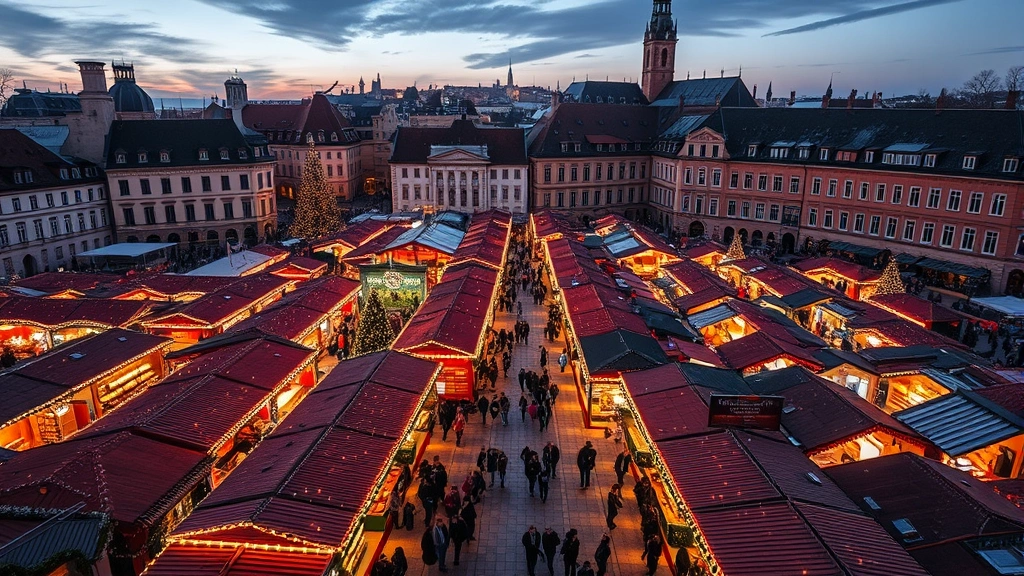
European Christmas markets represent one of the most enchanting seasonal shopping experiences in the world, blending centuries-old traditions with modern retail innovation. These festive marketplaces transform city centers and historic town squares into wonderlands of twinkling lights, handcrafted goods, and aromatic seasonal treats. From the Alpine valleys of Austria to the medieval streets of Germany, travelers and commerce enthusiasts alike recognize these markets as crucial economic engines and cultural phenomena that drive billions in seasonal spending.
The European Christmas market season, typically running from late November through December, attracts millions of visitors annually and generates substantial revenue for local retailers, artisans, and hospitality sectors. Understanding these markets provides valuable insights into seasonal consumer behavior, traditional retail models, and the intersection of cultural heritage with contemporary commerce. Whether you’re a travel enthusiast, a business analyst studying retail trends, or someone interested in how markets near you operate during peak seasons, European Christmas markets offer compelling lessons in experiential retail.
Vienna’s Christkindlmarkt: The Gold Standard
Vienna’s Christkindlmarkt stands as arguably Europe’s most prestigious and well-established Christmas market, operating continuously since the 1700s in Rathausplatz, directly in front of the stunning Vienna City Hall. This market exemplifies how traditional market principles have evolved while maintaining authentic cultural value. The market features approximately 150 vendor stalls offering everything from hand-blown glass ornaments to traditional Austrian crafts, with particular emphasis on premium, artisanal products rather than mass-produced merchandise.
The economic impact of Vienna’s market extends far beyond direct sales. The market attracts over 3 million visitors annually, generating substantial revenue through accommodation, dining, transportation, and ancillary services. Vendors at Vienna’s market report significantly higher profit margins compared to year-round operations, with many small artisans relying on the 4-6 week season for substantial annual income. The market’s success demonstrates how heritage and commerce can coexist, with strict vendor guidelines ensuring quality while allowing traditional craftspeople to thrive in an increasingly digital retail environment.
Vienna’s market also pioneered modern market management practices, including dedicated visitor services, accessibility features, and professional event coordination. The city invests substantially in infrastructure, lighting, and security, recognizing the market’s importance to both tourism and local retail ecosystems. This professional approach contrasts with smaller, more informal markets and provides valuable lessons for understanding how modern marketing strategies apply to traditional commerce models.
Nuremberg’s Christkindles: Tradition Meets Scale
Nuremberg’s Christkindles market, operating since 1628, holds the distinction of being one of Europe’s oldest and largest Christmas markets. Located in the historic Hauptmarkt square, this market attracts over 2 million visitors and features more than 180 vendor stalls spread across the medieval marketplace. The scale of Nuremberg’s operation demonstrates how traditional markets can grow while preserving authenticity and cultural significance.
The market’s economic model relies on carefully balanced vendor diversity. While approximately 60% of vendors are local Bavarian artisans and producers, the market also includes regional European craftspeople, creating a curated selection that appeals to both local shoppers and international tourists. This strategic mix maximizes visitor spending while supporting local economies. The average visitor spends approximately €45-60 per visit, with repeat visitors spending significantly more. During peak weekends, the market generates daily revenues exceeding €2 million across all vendors and associated services.
Nuremberg’s market demonstrates sophisticated understanding of retail psychology and consumer behavior. The market’s layout strategically positions food and beverage vendors to maximize foot traffic, while premium artisanal stalls occupy prime locations. The city coordinates with regional transportation authorities to manage logistics, and vendor selection follows strict criteria emphasizing handmade goods and traditional production methods. This approach has made Nuremberg’s market a benchmark for understanding how seasonal retail can drive significant economic activity while maintaining cultural authenticity.
Cologne’s Festive Waterfront Experience
Cologne operates multiple Christmas markets simultaneously, with the most spectacular being the Rhine-side market near Cologne Cathedral. This location represents a brilliant example of how geography and architecture enhance retail experiences. The stunning Gothic cathedral backdrop creates natural ambiance that amplifies consumer spending, as visitors remain longer and purchase more in emotionally compelling environments.
Cologne’s market strategy demonstrates understanding of modern consumer preferences. The city offers specialized markets targeting different demographics: the traditional market appeals to heritage-focused shoppers, while newer markets emphasize contemporary crafts and international goods. This segmentation allows the city to capture broader market share and extend visitor dwell time. Research on consumer behavior indicates that visitors encountering multiple market options spend 40-50% more than those visiting single venues.
The Rhine location also illustrates logistics advantages. River-based markets benefit from efficient supply chain management, with vendors accessing stalls via water routes, reducing congestion and improving inventory replenishment. This operational efficiency translates to better product availability and fresher merchandise throughout the season, enhancing consumer satisfaction and repeat visits.
Strasbourg’s Alsatian Heritage Markets
Strasbourg hosts approximately 12 distinct Christmas markets throughout the city, with the main market in Place Kléber functioning as the centerpiece. This distributed market model offers strategic advantages for both consumers and vendors. Rather than concentrating all activity in one location, Strasbourg’s approach distributes foot traffic across multiple neighborhoods, benefiting retailers throughout the city center.
The market is renowned for authentic Alsatian crafts and food products, including traditional kugelhopf bread, mulled wine, and handcrafted wooden decorations. This specialization creates strong brand identity and justifies premium pricing. Vendors report that Strasbourg’s market attracts buyers specifically seeking Alsatian goods, with approximately 35% of purchases representing products unavailable elsewhere. This scarcity value drives higher profit margins and repeat customer visits.
Strasbourg’s multi-market approach also demonstrates sophisticated understanding of retail real estate principles. By distributing markets across different neighborhoods, the city maximizes the economic benefit across diverse retail districts. Small retailers benefit from increased foot traffic, while market vendors benefit from established infrastructure and customer flow patterns. This symbiotic relationship strengthens overall economic resilience during the crucial holiday season.
Brussels: Chocolate and Commerce
Brussels’s Christmas markets, centered around Grand Place and other historic squares, emphasize Belgian specialty goods, particularly premium chocolates and handcrafted items. The market strategy reflects understanding of product differentiation and luxury positioning. Belgian chocolate represents approximately 45% of all purchases at Brussels markets, commanding premium prices due to brand reputation and perceived quality.
The Brussels market demonstrates how food and beverage categories drive overall market performance. Research indicates that markets emphasizing premium food products generate 30-40% higher revenues than those focused primarily on decorative items. Visitors purchasing food items typically buy additional merchandise, with average basket sizes 25% larger for food-inclusive purchases. This insight aligns with broader retail trends showing experiential consumption driving increased spending across categories.
Brussels also showcases how cultural heritage enhances commercial performance. The historic architecture and UNESCO World Heritage status of Grand Place create powerful emotional associations that amplify purchasing behavior. Consumers report spending more in historically significant locations, with price sensitivity decreasing by approximately 20% in heritage environments compared to modern settings. This psychological phenomenon represents valuable lessons for understanding how location and ambiance influence marketing strategy for retail businesses.
Retail Economics and Market Dynamics
European Christmas markets represent a significant economic phenomenon worthy of serious business analysis. According to Statista’s European retail analysis, seasonal markets contribute approximately €8-10 billion to European economies annually. This figure reflects direct vendor sales, accommodation, dining, transportation, and ancillary services generated by market visitors.
The seasonal concentration of consumer spending at Christmas markets raises important questions about retail strategy and why marketing is important for business during peak periods. Markets generate approximately 40-50% of annual revenues for many vendors during the 4-6 week season. This concentration creates both opportunity and risk, requiring sophisticated inventory management, cash flow planning, and demand forecasting.
Market vendors employ increasingly sophisticated retail techniques despite traditional aesthetics. Modern Christmas market vendors utilize point-of-sale systems, mobile payment processing, and data analytics to optimize performance. Many maintain sophisticated market terminology and business practices comparable to established retail operations, demonstrating how traditional models integrate contemporary commerce tools.
The consumer behavior patterns at Christmas markets diverge significantly from year-round retail. Research from the European Parliament’s economic research division indicates that holiday market shoppers exhibit 60% higher price insensitivity compared to regular retail environments. Additionally, purchase decision-making accelerates dramatically, with average deliberation times decreasing by 40-50%. These behavioral patterns reflect the emotional and experiential nature of holiday shopping, where ambiance and cultural context override rational price comparison.
The market structure itself reflects sophisticated understanding of retail economics. Most European Christmas markets operate on vendor booth rental models, with cities or market operators charging €50-400 per square meter for seasonal space. This rental model provides predictable revenue for market operators while shifting inventory and demand risk to individual vendors. The model has proven remarkably resilient, with vendor participation rates remaining above 85% annually despite economic fluctuations.
Planning Your Market Visit
Strategic planning significantly enhances Christmas market experiences and spending satisfaction. Most major European Christmas markets operate from late November through December 24, with peak attendance occurring December 15-23. Visiting during shoulder periods (late November or early December) offers advantages including shorter wait times, better vendor availability, and less crowded shopping experiences.
Budget planning should account for multiple spending categories. Average visitor spending breaks down approximately as follows: 35% food and beverages, 40% merchandise and crafts, 15% entertainment and activities, and 10% miscellaneous services. However, actual spending varies dramatically by market and visitor profile, with premium markets in Vienna and Nuremberg attracting higher-spending customers.
Transportation planning proves critical for market success. Most major European cities offer comprehensive public transportation networks with special holiday schedules and packages. Many cities offer travel packages combining market access with accommodation, recognizing the market’s role in destination tourism. Visitors should research transportation options in advance, as markets generate significant congestion during peak periods.
Accommodation planning should begin 6-8 weeks before intended travel. Christmas markets drive substantial tourism demand, with hotel occupancy rates exceeding 90% during peak periods. Early booking ensures better rates and availability, with prices typically 30-50% higher during peak market weeks compared to shoulder periods.
Vendor selection strategies can enhance shopping efficiency. Most major markets publish vendor directories online, allowing visitors to identify specific craftspeople and products before arrival. This planning approach aligns with modern consumer research behavior, where approximately 65% of holiday shoppers conduct online research before in-person purchases.
FAQ
What is the best time to visit European Christmas markets?
The optimal timing depends on personal preferences. Early December (December 1-10) offers pleasant shopping without extreme crowds but with full vendor participation and fresh inventory. Mid-December (December 10-20) provides peak market atmosphere but features significant congestion and crowding. Late November offers the advantage of fewer visitors but reduced vendor selection as markets are still opening. December 24 closures vary by market, with some operating until late afternoon and others closing by noon.
How much should I budget for Christmas market visits?
Budget recommendations vary by market quality and personal spending habits. A conservative estimate suggests €50-100 per person daily for food, beverages, and light shopping. Premium markets in Vienna and Nuremberg justify higher budgets of €100-200 daily for quality artisanal purchases. Families with children should budget additional amounts for entertainment and activities, typically €30-50 per child daily.
Are Christmas markets only for shopping?
Modern Christmas markets function as comprehensive entertainment and cultural destinations. While shopping represents the primary activity, markets feature live music, theatrical performances, holiday activities for children, and dining experiences. Many visitors attend markets primarily for atmosphere and entertainment rather than purchasing merchandise, reflecting the experiential nature of contemporary holiday celebrations.
How do European Christmas markets differ from North American holiday markets?
European Christmas markets emphasize artisanal craftsmanship, traditional foods, and heritage products, with strict vendor guidelines ensuring quality and authenticity. North American markets tend toward broader product ranges with higher percentages of mass-produced merchandise. European markets also typically feature more extensive food and beverage offerings, with mulled wine and traditional hot drinks representing significant revenue categories. Additionally, European markets operate longer seasonal periods and achieve higher visitor volumes relative to population.
Can I purchase items online from Christmas market vendors?
Many traditional Christmas market vendors operate exclusively during the market season and do not maintain year-round online presence. However, increasingly vendors establish websites and social media accounts enabling off-season purchases. The Europeana platform provides information about specific vendors at major markets. Additionally, some cities maintain vendor registries facilitating post-market contact for special orders.
Are Christmas markets accessible for visitors with mobility challenges?
Accessibility varies significantly by market. Vienna’s Christkindlmarkt and Nuremberg’s market have invested substantially in accessibility infrastructure including accessible pathways, seating areas, and restroom facilities. Smaller markets may offer limited accessibility. Visitors should contact market organizers directly regarding specific accessibility accommodations and assistance services available during visits.