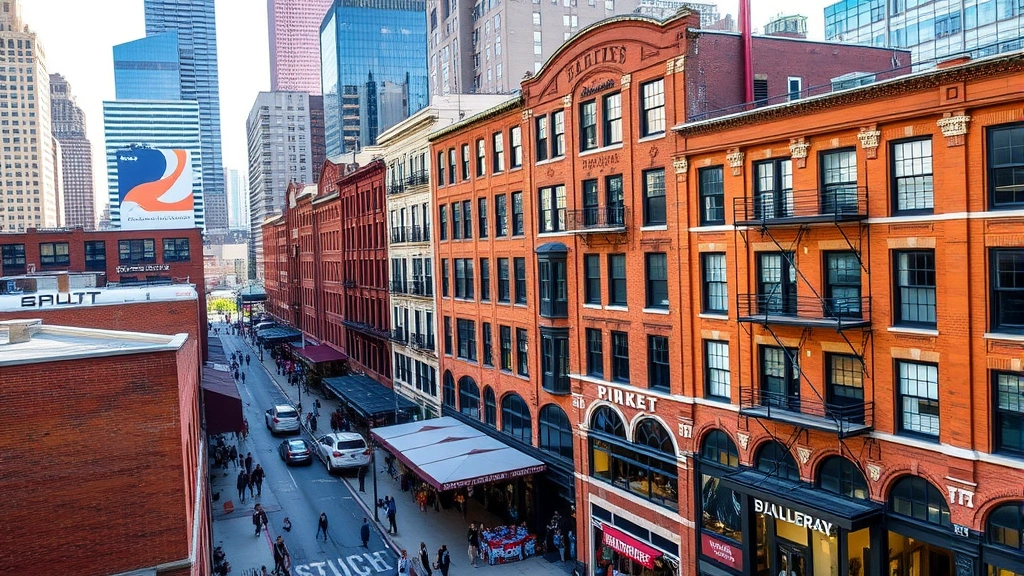
Fulton Market District: Insider’s Review of Chicago’s Premier Commerce Hub
The Fulton Market District stands as one of Chicago’s most dynamic and rapidly evolving commercial neighborhoods, representing a compelling case study in urban revitalization and modern commerce. Once dominated by wholesale produce vendors and meat packers, this historic district has transformed into a vibrant mixed-use destination that blends industrial heritage with contemporary retail, dining, and office spaces. Understanding the Fulton Market District’s evolution provides valuable insights into how traditional wholesale markets adapt to changing consumer behaviors and urban development trends.
For business owners, entrepreneurs, and investors evaluating Chicago’s commercial landscape, the Fulton Market District presents unique opportunities and challenges. The neighborhood’s trajectory demonstrates how strategic location, adaptive reuse of infrastructure, and alignment with broader market trends can create significant value. This insider’s review examines the district’s current state, commercial viability, tenant mix, and future prospects through a data-driven lens, helping stakeholders make informed decisions about presence and investment in this transformed neighborhood.

Historical Evolution and Market Transformation
The Fulton Market District’s history spans over 150 years, beginning as Chicago’s primary wholesale produce and meat market in the 1870s. For more than a century, the district functioned as a critical logistics hub where farmers, wholesalers, and retailers converged daily to conduct commerce. The neighborhood’s architecture reflects this industrial heritage, with sprawling warehouse buildings, loading docks, and infrastructure designed specifically for wholesale distribution operations.
Beginning in the early 2000s, the district experienced gradual shifts as wholesale market operations consolidated and relocated. The modernization of supply chain logistics reduced the need for centralized wholesale markets, prompting property owners to explore alternative uses for valuable urban real estate. This transition period set the stage for the dramatic redevelopment that accelerated in the 2010s. Understanding this context is essential for businesses considering the district, as it explains both the architectural character and the ongoing evolution of the neighborhood’s commercial identity.
The transformation accelerated significantly after 2015 when major developers and retailers recognized the district’s potential. The combination of authentic industrial architecture, proximity to downtown Chicago, and available real estate at competitive prices created an attractive proposition for forward-thinking brands. Today, the Fulton Market District represents a textbook example of successful urban adaptive reuse, where industrial heritage meets modern commerce. This evolution aligns with broader trends discussed in our guide on digital marketing trends 2025, as retailers adapt their physical and digital strategies to meet evolving consumer expectations.

Current Commercial Landscape and Tenant Mix
Today’s Fulton Market District comprises approximately 2.5 million square feet of mixed-use space, with a diverse tenant roster that includes flagship retail locations, restaurants, offices, and residential units. The tenant mix reflects a deliberate strategy to create a destination that attracts multiple consumer segments throughout the day and week. Major retailers and restaurants have invested significantly in the district, recognizing its growing prominence as a lifestyle and commerce destination.
The district’s retail component includes a compelling mix of national brands, local Chicago businesses, and emerging merchants. High-profile tenants have established flagship locations in the district, using the space to showcase product ranges and brand experiences that might not fit in traditional downtown retail corridors. The restaurant scene has become particularly robust, with both established fine dining concepts and casual eateries capitalizing on the neighborhood’s foot traffic and demographic profile. This diversity creates a self-reinforcing cycle where varied retail and dining options attract broader audiences, supporting higher traffic volumes and longer visit durations.
Office space in the Fulton Market District has attracted significant tenant interest, particularly from technology companies, creative agencies, and professional services firms seeking alternatives to traditional downtown locations. The combination of modern office infrastructure within historic buildings appeals to companies prioritizing employee experience and brand positioning. The residential component, including both market-rate apartments and lofts converted from historic warehouse spaces, has contributed to the district’s vitality by creating a resident population that supports retail and dining establishments year-round.
For retailers considering presence in the district, understanding the current marketing strategy for startups and established brands operating in the space is crucial. The competitive environment demands differentiation through unique product offerings, exceptional customer experience, and strategic positioning within the district’s evolving ecosystem.
Real Estate Market Dynamics
Fulton Market District real estate has experienced significant appreciation over the past decade, with commercial lease rates and property values increasing substantially. Ground-floor retail space commands premium pricing, reflecting both the neighborhood’s growing desirability and the competition for prime locations. According to LoopNet market data, average asking rents in the district have risen approximately 8-12% annually over the past five years, outpacing many comparable Chicago neighborhoods.
The district’s real estate market demonstrates strong fundamentals, with low vacancy rates, high tenant retention, and consistent demand from new retailers and restaurants. Property owners have invested in infrastructure improvements, including enhanced loading facilities, updated utilities, and modern building systems, making the district attractive to contemporary retail and office tenants. The scarcity of available ground-floor retail space has created competitive leasing conditions, where desirable locations attract multiple qualified tenants.
For retailers evaluating expansion or relocation, the Fulton Market District represents a higher-cost option compared to suburban or secondary markets, but the trade-offs include access to affluent consumer demographics, high foot traffic, and significant brand visibility. The decision to locate in the district should align with overall how to create a marketing plan that leverages the neighborhood’s strengths and demographic characteristics.
Institutional investors have shown strong interest in Fulton Market District properties, viewing the neighborhood as a long-term growth opportunity with appreciation potential. The combination of limited available space, strong tenant demand, and Chicago’s overall economic fundamentals supports continued real estate value appreciation in the district.
Consumer Demographics and Shopping Patterns
The Fulton Market District attracts a diverse consumer base, though certain demographic characteristics define the primary target audience for most retailers. Household income levels in the district’s primary trade area exceed Chicago’s median by 40-60%, with significant concentration of affluent consumers within a 2-3 mile radius. Age demographics skew younger than the citywide average, with particular strength among 25-45 year old professionals and young families.
Shopping patterns in the Fulton Market District reflect its positioning as a destination rather than a convenience retail location. Consumers typically visit the district with specific purchase intentions, often combining shopping with dining and entertainment activities. Average visit duration exceeds 2-3 hours, indicating that retailers benefit from the district’s ability to anchor multiple-purpose trips. Weekend traffic patterns show particular strength, with Friday through Sunday accounting for 55-65% of weekly foot traffic.
Consumer behavior data indicates strong preferences for experiential retail, locally-sourced products, and brands aligned with sustainability and social responsibility values. The demographic profile of Fulton Market District shoppers shows particular receptivity to premium product positioning, innovative retail formats, and integrated digital-physical experiences. This alignment with contemporary consumer preferences has attracted retailers focused on building community engagement and brand loyalty rather than pure transaction volume.
The district’s residential population has grown substantially, creating an additional consumer segment with daily exposure to retail and dining establishments. These residents typically represent affluent, educated demographics with high consumer spending capacity and strong brand loyalty to neighborhood merchants. For best marketing tools for small businesses operating in the district, leveraging this resident base through community engagement and loyalty programs provides sustainable competitive advantage.
Retail Performance and Sales Data
According to International Council of Shopping Centers research, Fulton Market District retail locations generate sales per square foot metrics that exceed Chicago’s average by 25-35%, depending on retail category. This performance reflects the district’s strong foot traffic, affluent consumer base, and positioning as a destination shopping location. Food and beverage establishments show particularly strong performance metrics, with many restaurants operating at or above capacity during peak periods.
Apparel and accessories retailers in the district report performance metrics aligned with or exceeding national benchmarks for flagship and premium specialty locations. The district’s consumer base demonstrates strong purchase intent and willingness to invest in quality products, supporting higher average transaction values compared to many alternative locations. Home goods, lifestyle products, and experiential retail categories show particularly robust performance in the Fulton Market District.
Sales productivity data suggests that retailers in the district benefit from the neighborhood’s destination status and integrated retail-dining ecosystem. Cross-shopping patterns indicate that consumers visiting for dining frequently engage in retail purchases, and vice versa. This synergy creates a supportive environment for diverse retail categories and supports overall sales performance across the district.
The COVID-19 pandemic created temporary disruptions in the district’s retail operations, but recovery has been robust. Retailers with strong e-commerce capabilities and omnichannel strategies demonstrated greater resilience during closures and capacity restrictions. The experience underscored the importance of integrated digital strategies for retailers operating in premium urban locations, a topic covered in detail in our marketing automation for small business guide.
Competition and Market Positioning
Competition in the Fulton Market District has intensified as the neighborhood’s reputation and foot traffic have grown. Retailers operating in the district face competition from both direct competitors and the broader ecosystem of retail, dining, and entertainment options. Successful retailers in the district differentiate through unique product assortments, exceptional customer service, distinctive brand experiences, and integration with the neighborhood’s community identity.
The district’s competitive environment favors retailers with strong brand recognition, differentiated product offerings, and ability to create memorable customer experiences. Generic or undifferentiated retail concepts struggle in the district’s competitive landscape, where consumers have abundant alternatives and high expectations. Retailers must justify premium real estate costs through superior performance, brand positioning, or strategic value within broader retail networks.
Competition extends beyond traditional retail to include the broader entertainment and dining ecosystem. The district’s success as a destination depends on its ability to attract consumers for multiple purposes, meaning that retail establishments compete for attention and engagement alongside restaurants, bars, galleries, and other attractions. Understanding this competitive dynamics requires analysis of overall district traffic patterns, consumer spending allocation, and seasonal variations.
Successful positioning in the Fulton Market District typically involves one or more of the following strategies: flagship brand representation, unique local or independent retail concepts, experiential retail formats that create distinctive customer experiences, integration with the district’s food and beverage ecosystem, or strategic positioning within the affluent consumer market. Retailers should align their market rise hub blog content and marketing strategies with these positioning approaches to maximize relevance and engagement with district consumers.
Future Growth Projections
The Fulton Market District’s trajectory suggests continued growth and evolution over the next 5-10 years. Several factors support this projection, including continued population growth in surrounding neighborhoods, ongoing commercial and residential development, and the district’s establishment as a premier Chicago destination. However, growth will occur within constraints imposed by limited available space, high real estate costs, and mature market positioning.
Future development in the district will likely emphasize vertical growth, with increased residential and office density in new construction and adaptive reuse projects. This density will support expanded retail and dining options while maintaining the district’s distinctive character. Infrastructure improvements, including enhanced transportation connections and public space upgrades, will continue to enhance the district’s attractiveness as a destination.
According to Chicago Federal Reserve economic forecasts, the district’s supporting economic fundamentals remain strong, with employment growth in professional services, technology, and creative industries supporting continued consumer spending in the district. The affluent demographic profile of the district’s trade area provides resilience during economic cycles, though discretionary spending patterns may moderate during recessions.
Retailers considering long-term presence in the Fulton Market District should anticipate continued evolution of the competitive landscape, ongoing pressure to differentiate and innovate, and potential shifts in consumer preferences and shopping patterns. The district’s maturation as a destination suggests that future success will depend increasingly on unique positioning, brand strength, and ability to create compelling customer experiences that justify premium real estate costs.
FAQ
What makes the Fulton Market District attractive for retail expansion?
The district offers several compelling advantages: affluent consumer demographics, high foot traffic from destination shopping and dining, premium brand positioning opportunities, distinctive industrial architecture, and strong sales performance metrics. However, retailers must be prepared for premium real estate costs and competitive market conditions.
How have lease rates changed in the Fulton Market District?
Commercial lease rates in the district have increased 8-12% annually over the past five years, outpacing many comparable Chicago neighborhoods. Ground-floor retail space commands particular premiums, reflecting strong tenant demand and limited available inventory.
What types of retailers perform best in the Fulton Market District?
Flagship brand locations, premium specialty retailers, experiential retail concepts, food and beverage establishments, and unique independent retailers show strongest performance. Generic or undifferentiated retail concepts typically struggle in the district’s competitive environment.
Is the Fulton Market District suitable for all retail categories?
Not all retail categories perform equally in the district. Categories aligned with affluent consumer preferences, lifestyle positioning, and experiential retail models show strongest performance. Value-oriented and commodity retail categories typically underperform relative to real estate costs.
What is the primary consumer demographic for Fulton Market District retailers?
The primary demographic includes affluent professionals and young families, ages 25-45, with household incomes 40-60% above Chicago’s median. Consumers are typically educated, brand-conscious, and value quality, sustainability, and unique retail experiences.
How has e-commerce impacted Fulton Market District retailers?
E-commerce has created both challenges and opportunities. Retailers with strong omnichannel strategies and integrated digital-physical experiences have adapted successfully. The pandemic accelerated adoption of digital tools and highlighted the importance of robust online capabilities for premium urban retailers.